

Three years ago, the phrase "AI marketing" sounded like science fiction — reserved for tech giants with million-dollar budgets. Today, a small restaurant in a mid-sized Bulgarian city can use the same principles and tools as the world's leading companies. The only difference is knowledge.
In this article we will explain, without technical jargon, what has genuinely changed, what AI brings to small businesses, and the concrete steps to get started.
What Does "AI Marketing" Actually Mean?
AI marketing does not mean "robots write your ads". It means using data and algorithms to:
- Better understand who your customers are and what they want
- Automate repetitive tasks (emails, posts, reports)
- Personalise communication with every customer at scale
- Predict which leads are most likely to convert
- Optimise your advertising budget in real time
In plain terms: AI marketing makes small businesses smarter at attracting and retaining customers — without having to hire an entire marketing department.
What Has Changed in Recent Years
Before: Marketing Was a Budget Game
Until recently, the logic was simple: the more you spend on advertising, the more customers you get. Small businesses simply could not compete with corporate budgets. The result? Small players paid a premium for low-efficiency advertising because they had no access to the data needed to optimise.
Now: Marketing Is a Knowledge Game
AI has democratised access to data and insights. Today, tools available for under 50 EUR per month can tell you:
- Which of your customers has the highest likelihood of buying again
- What time and day your emails are opened the most
- Which keywords bring real customers — not just traffic
- Which competitors are "stealing" your potential customers and how
This advantage is not reserved for Google and Meta. It is your advantage — if you know how to use it.
5 Concrete Ways AI Helps Small Businesses
1. Automated Email Marketing
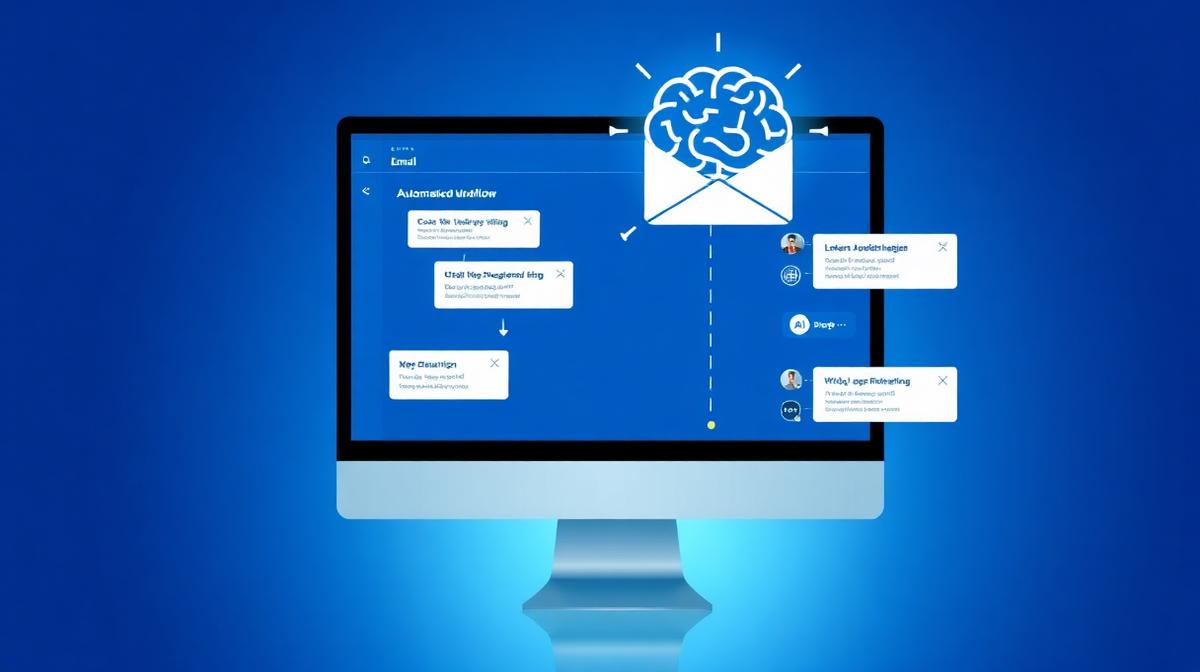
Imagine every new customer automatically receiving a sequence of personalised emails: a welcome, useful content, a special offer precisely when they are most likely to buy. All without any manual work after the initial setup. Tools like Mailchimp, Klaviyo and HubSpot already use AI to determine the optimal content, timing and frequency for each recipient. The result: email campaigns with 3-4 times higher effectiveness than mass newsletters.
2. Intelligent Customer Segmentation
Not all your customers are the same. Some buy once and disappear. Others are loyal fans ready to recommend your business. AI can automatically divide your customers into groups and show you where to focus your efforts. The typical segments we work with:
- "Dormant" customers — purchased 6+ months ago, need reactivation
- "Champions" — loyal, high-value, ideal for referral programmes
- "At-risk" — purchases declining, need special attention
- "New" — with potential, need onboarding
3. Data-Driven SEO Optimisation
Instead of guessing what your customers search for, AI analyses thousands of searches and shows you exactly what to write. Which topics are missing from your site, what questions people ask, and how to position yourself ahead of competitors.
4. Website Personalisation
Imagine a website that shows different content to different visitors — a new customer sees an introductory offer, a returning visitor sees the products they browsed on their last visit. AI makes this a reality even for small businesses.
5. Predictive Analytics
Which of your leads is close to buying? Which product will be popular next month? When is the best time to run a promotion? AI analyses historical data and delivers concrete forecasts, so you rely on insight rather than instinct.

Common Myths (and the Truth Behind Them)
MYTH: "AI marketing is only for large companies."
TRUTH: Today AI tools are accessible for businesses with a monthly budget of 50–200 EUR. The democratisation is real.
MYTH: "AI will replace humans in marketing."
TRUTH: AI automates routine tasks and analyses data. Strategy, creativity and customer relationships remain human.
MYTH: "You need to be technical to use AI."
TRUTH: Modern AI marketing tools are built for people without a technical background. The interfaces are intuitive and the results are measurable.
MYTH: "My business is too small for AI marketing."
TRUTH: Small businesses actually benefit more from AI, because it compensates for limited resources with smarter decisions.
How to Start: Practical Steps
- Step 1 — Get your data in order: Make sure Google Analytics, Meta Pixel and Google Search Console are set up.
- Step 2 — Automate your emails: Set up a welcome sequence for new contacts.
- Step 3 — Analyse your customers: Segment your existing customer base and identify your "Champions".
- Step 4 — Optimise SEO: Use search data to prioritise your content creation.
- Step 5 — Test and optimise: AI works best in iterations. Test, measure, improve.
Why Now Is the Right Moment
There is a window of opportunity that is slowly closing. Businesses that adopt AI marketing now are building data, know-how and competitive advantage that will be very difficult to match in 2–3 years.
Your competitors are either already doing it or will start soon. The question is not whether to use AI in marketing — it is when.
Want to discover how AI can transform your marketing? Request a free consultation from GoFlowAI and get a personalised strategy for your business.